
Performance Marketing Insights & Guides
9 min read
Google Ads vs Meta Ads: Which Should Small Businesses Choose First?

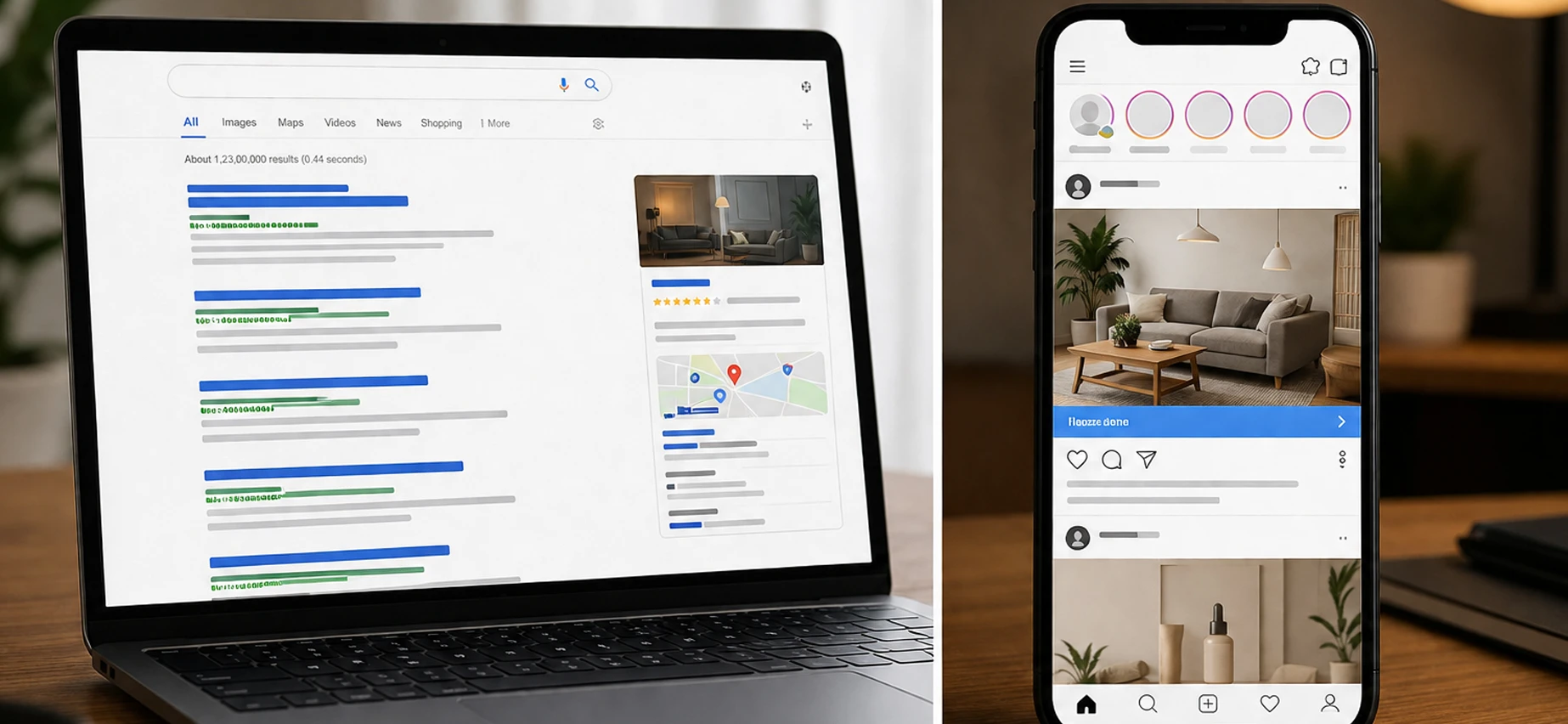
"Should I run Google Ads or Meta Ads?" is one of the most common questions small business owners ask when they're ready to spend their first advertising rupee — and most of the answers online say some version of "it depends," without actually explaining how to decide.
It genuinely does depend, but not on vague factors. It comes down to one core question: are people already searching for what you sell, or do you need to introduce them to it? Everything else — cost, speed of results, and which one to try first — follows from that answer.
The Core Difference: Intent vs Discovery
Google Ads work on intent. Someone types "AC repair near me" or "best CA for small business in Surat" because they already have a need and are actively looking for a solution. Your ad meets them at the exact moment they're ready to act.
Meta Ads work on discovery. Someone is scrolling Instagram or Facebook, not looking for anything specific, and your ad introduces a product or service they didn't know they wanted — or didn't know your business offered.
This single distinction explains almost every other difference between the two platforms.
Cost Comparison: What You'll Actually Pay
In India, typical cost-per-click ranges look roughly like this:
- Meta Ads: approximately ₹45 to ₹185 per click, varying by industry and audience competitiveness.
- Google Ads: approximately ₹90 to ₹900+ per click, with highly competitive keywords (legal, finance, real estate) commanding the higher end.
On the surface, Meta looks cheaper — and per click, it usually is. But cost per click is the wrong metric to compare in isolation. A ₹400 Google click from someone actively searching "buy [product] online" can convert into a sale far more often than a ₹60 Meta click from someone who was just scrolling. What matters is cost per actual customer, not cost per click.
Speed of Results: Which Gets You Customers Faster?
Google Ads tend to produce faster initial results because you're capturing existing demand — someone searching today can become a customer today. This makes Google Ads well-suited to businesses that need leads or sales quickly.
Meta Ads typically take longer to show strong results — often 3 to 6 weeks — because you're building awareness and trust before someone is ready to act. The payoff tends to be steadier, more scalable growth once the audience and creative are dialled in.
Decision Framework: Which Should You Choose First?
Rather than a generic "it depends," here is a practical way to decide based on your specific business:
Choose Google Ads first if:
- You offer a service people search for when they have an urgent or specific need (repairs, medical, legal, local trades).
- Your business has a well-defined service area and people in that area are actively searching for it.
- You need leads or enquiries within the next 1–2 weeks, not in a month or two.
- Your product or service is something people already know exists and actively look for by name or category.
Choose Meta Ads first if:
- Your product or service is visually appealing and benefits from being seen, not just searched for (fashion, food, home decor, beauty).
- You're a new brand and most of your target audience doesn't know you exist yet.
- You want to build a retargeting audience and email/WhatsApp list over time for ongoing, lower-cost marketing.
- Your budget is limited and you want to stretch it further per click while building awareness.
If you're still unsure which category your business falls into, this is essentially the same logic covered in our guide to running Meta ads on a small budget — Meta rewards patience and creative quality, while Google rewards being visible exactly when someone needs you.
Best Choice by Business Type
- Local service businesses (plumbers, electricians, clinics, salons): Google Ads, paired with strong local SEO fundamentals for compounding organic visibility over time.
- E-commerce and visually-driven products: Meta Ads, especially Instagram, where products can be discovered through engaging visuals and short video.
- B2B services and consultants: Google Ads for capturing active searches, with Meta Ads layered in later for retargeting and thought-leadership content.
- New brands with no existing demand: Meta Ads first, to build awareness, followed by Google Ads once people start searching for your brand by name.
The real question isn't "which platform is better" — both are excellent at what they're designed for. The question is whether your customers are searching for you, or waiting to be shown you.
The Smartest Long-Term Move: Use Both, in Sequence
Most established small businesses that scale successfully eventually use both platforms — but rarely starting on day one with a budget split between them. The more effective approach: prove out one platform first, reach profitability or consistent lead flow, and then add the second platform with its own dedicated budget rather than splitting an already-small budget thin across two unproven channels.
Google captures the demand that already exists. Meta creates new demand and builds the audience that will eventually search for you on Google. Used together over time, they reinforce each other — but used together too early, with too little budget, neither platform gets enough data to perform well.
Not sure which platform fits your business?
Buzzlane builds performance marketing strategies tailored to your business type and budget — not a one-size-fits-all template.
Frequently Asked Questions
Which is cheaper, Google Ads or Meta Ads?
Meta Ads typically have a lower cost per click than Google Ads, since Google's search-based intent commands a premium. However, cost per click alone doesn't determine value — a more expensive Google click from a ready-to-buy searcher can still be cheaper per actual sale than a low-cost Meta click.
Should a brand-new small business start with Google Ads or Meta Ads?
It depends on whether people are already searching for your service. If your business solves a problem people actively search for (a plumber, a clinic, a repair service), start with Google Ads. If your product or service is something people discover rather than search for, start with Meta Ads.
Can a small business run both Google Ads and Meta Ads at the same time?
Yes, but only once each platform is generating positive results independently. Running both with a very small combined budget split too thin across two platforms usually performs worse than focusing fully on one platform first.
How much budget do I need to test Google Ads versus Meta Ads?
A minimum of two to three weeks at ₹300–₹500 per day on a single platform is needed to gather enough data to judge performance fairly, rather than testing both platforms simultaneously with a divided, insufficient budget.
Latest Posts



Relevant Post


Satish M
With 15 years in IT and a passion for pixels, Satish is the brain behind Buzzlane. As a Web Designer and Front-End Developer turned founder, he knows what makes the web work — and more importantly, what makes it wow.